
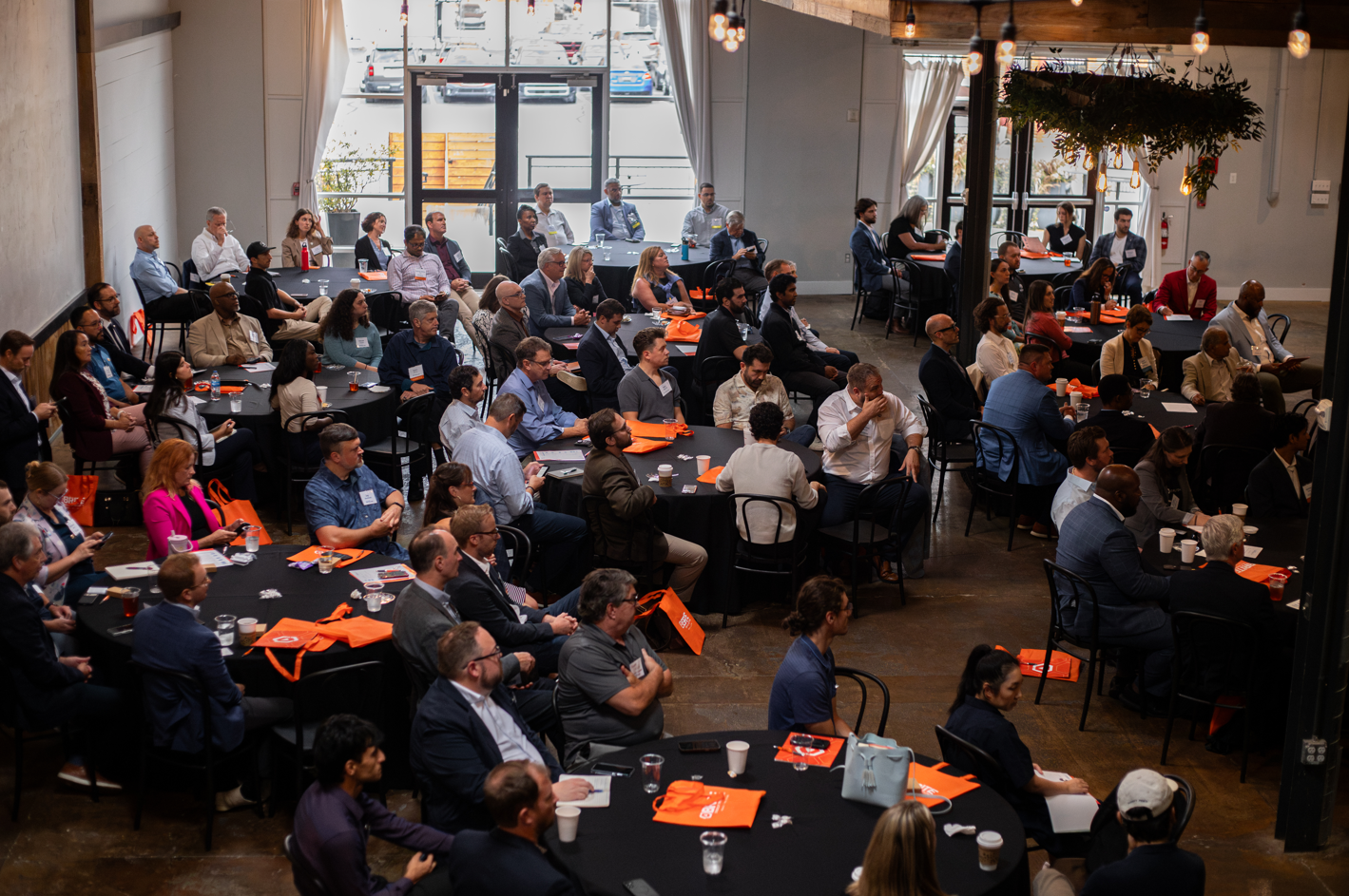
The inaugural 2026 BRITE Energy Innovation Summit: Grid to Growth convened a packed audience of key decision-makers in Columbus on September 10, 2026. Hosted by BRITE Energy Innovators, Ohio’s only advanced energy technology incubator, the statewide summit brought together a dense cross-section of national utilities, hyperscale data center users, commercial developers, supply chain partners, and industrial manufacturers alongside representatives from the Ohio Manufacturers’ Association (OMA) and the Ohio Business Energy Partnership (OBEP). The room also featured cleantech startup founders, energy engineers, policy advocates, labor leaders, and venture investors.
The core purpose of this gathering focused directly on how regional energy constraints both influence and depend upon our ability to create and scale regional innovation. Unprecedented power demand from artificial intelligence expansion, data center development, and industrial reshoring creates a massive market pull for deployable hardtech solutions. At the same time, a startup’s ability to scale hinges on transparent utility policies, streamlined siting, a ready skilled workforce, and corporate partners willing to pilot new technologies in real-world environments.
Designed to move the ecosystem from conversation to execution, the summit unfolded across four interconnected chapters: Vision, Capacity, Mobilization, and Frontier. Across every session, speakers proved that regional innovation is the ultimate bridge between rapid economic expansion and long-term grid reliability. By creating an environment where utilities, policymakers, and tech pioneers all win, the Midwest can de-risk groundbreaking energy hardware, keep power affordable for everyday ratepayers, and build a lasting legacy of high-paying local jobs across the Silicon Heartland.
Key Takeaways Across the Four Chapters
- Energy infrastructure is one of Ohio’s competitive economic advantages. As electricity demand accelerates, proactive alignment between federal energy policy, regional utilities, and cleantech startups is essential to keep the region economically competitive.
- Generation-neutral policy protects business flexibility and market choice. According to panelists, current restrictions like Ohio Senate Bill 52 and targeted state innovation funds create artificial market winners. Pragmatic policy allows commercial energy users to select generation and storage options such as natural gas, solar, geothermal, and battery storage based on operational needs.
- Direct market contracting protects everyday ratepayers from rising costs. Requiring hyperscale data centers and major power consumers to contract directly with generators and fund their own transmission upgrades aligns infrastructure buildouts with verified demand without raising utility bills for existing customers.
- Grid resilience depends as much on a skilled workforce as it does on physical generation. Because training a commercial journeyman electrician requires five years, labor partners like the International Brotherhood of Electrical Workers must be engaged at project inception to prevent critical workforce bottlenecks.
- Authentic community engagement and transparency eliminate local pushback. Overcoming opposition to data centers and energy infrastructure requires early dialogue, removing restrictive nondisclosure agreements, and delivering tangible community benefits, including local tax revenues, water infrastructure upgrades, and union jobs.
- Venture capital investment is open to capital-intensive energy hardware. Surging AI power demand has created what panelists say could be a once-in-a-generation market moment for hardtech startups.
- Scaling energy hardware requires rapid manufacturing deployment and pilot validation. Hardtech founders must leverage regional utility innovation programs and Midwestern industrial manufacturing strengths to move rapidly from demonstration pilots to full commercial production.

Alignment and Disagreement
Areas of Strong Alignment
- Technology-Neutral Siting and Permitting Reform: Panelists across all sessions agreed that public policy should remain technology-neutral and that state regulatory processes, including power siting board reviews and prolonged judicial appeals, must be streamlined to accelerate deployment.
- Early Cross-Sector Collaboration: Speakers concurred that electric utilities, natural gas providers, industrial customers, regulators, and labor unions must coordinate at project inception rather than in isolation, eliminating costly delays and supply chain bottlenecks.
- Midwestern Manufacturing and Skilled Workforce Pride: Leaders aligned on leveraging regional industrial expertise in machining, welding, and skilled trades to build cleantech hardware locally, revitalizing industrial communities and creating lasting middle-class careers.
Areas of Disagreement
- Centralized Utility Forecasting vs. Direct Market Contracting: A primary tension emerged between traditional utility load forecasting, which risks overbuilding transmission assets and socializing costs across ratepayers, and competitive market contracts that place direct financial risk on large commercial developers.
- Pace of Hyperscaler Development vs. Community Lead Times: Panelists highlighted the friction between data center developers seeking rapid speed to power and local communities or labor organizations that require transparent reviews, environmental assurances, and multi-year workforce training pipelines.
Opportunities and Next Steps
When asked about practical solutions that could be advanced within the next 24 months in Ohio, our panelists suggested the following:
Generation-Neutral Policy and Permitting Reform
Panelists discussed how energy policy and permitting processes can affect investment decisions, project timelines, and energy affordability. Potential areas for further consideration included the treatment of different generation sources in state policy and the predictability of regulatory decision timelines.
Direct Contracting Frameworks for High-Demand Power Users
Panelists proposed that enabling data centers and industrial energy consumers to contract directly for power and fund dedicated transmission upgrades eliminates cost socialization.
Community Energy and Demand Response
Passing House Bill 303 for community energy pilots and House Bill 427 for voluntary demand response unlocks localized generation and voluntary load management. Depending on legislative outcomes and program design, these approaches could create opportunities to explore localized generation, flexible load management, and microgrid development over the next 12 to 24 months.
Workforce Partners and Local Community Perspectives
The discussion highlighted the potential value of engaging workforce organizations and community stakeholders early in project planning. Topics included aligning workforce development with project timelines, considering transparency in project-related agreements, and exploring community benefit agreements as tools for addressing local priorities.
Regional Hardware Demonstration and Capital Scaling
Establishing dedicated demonstration funding and pilot validation facilities in Ohio will help hardtech startups cross the commercial valley of death. Investors, corporate partners, and state leaders must support local manufacturing scaling to capture the full economic value of energy hardware production.

Featured Speakers, Startups, and Organizations
Speakers
- Jade Davis: Chief Executive Officer, BRITE Energy Innovators (Event Host & Vision Moderator)
- Alex Fitzsimmons: Associate Deputy Secretary of Energy, U.S. Department of Energy (Keynote Speaker, Vision Chapter)
- Marc Reitter: President and Chief Operating Officer, AEP Ohio (Keynote Speaker, Vision Chapter)
- Aaron Marcovy: Chief Business Development Officer, NOPEC (Moderator, Capacity Panel)
- Gena Shelton: Executive Director, Ohio Business Energy Partnership (Panelist, Capacity Panel)
- Joshua Davis: U.S. Lead, Business Development – Gas Utility, Enbridge Gas (Panelist, Capacity Panel)
- John Seryak: Managing Partner, Go Sustainable Energy (Panelist, Capacity Panel)
- Kayce Kasten Borders: Projects Real Estate Senior Counsel, Norton Rose Fulbright (Moderator, Mobilization Panel)
- Irina Filippova: Chief Operating Officer, Electrada (Panelist, Mobilization Panel)
- Joe Flarida: Executive Director, Power a Clean Future Ohio (Panelist, Mobilization Panel)
- Scott Satterlee: 4th District International Representative, International Brotherhood of Electrical Workers (Panelist, Mobilization Panel)
- Andrew Burchwell: Founder and Executive Director, Ohio Blockchain Council (Moderator, Frontier Panel)
- Aaron Goodman: Founder and CEO, Petra Power (Panelist, Frontier Panel)
- Alex Zorniger: Chief Commercial Officer, Power to Hydrogen (Panelist, Frontier Panel)
- Julia Dewey: Chief Partnerships Officer, Rev1 Ventures (Panelist, Frontier Panel)
- Marisa Long: Founder, Longevity Communications (Event Emcee and Communications Partner)
Featured BRITE Startups
- Cabomba: High-efficiency filtration systems for data centers.
- EnergiAcres: Data center campuses combining behind-the-meter generation with on-site greenhouses.
- GLX POWER: Modular power electronics for energy storage and e-mobility.
- GridForge Energy: Privacy-preserving, real-time verification infrastructure for the energy sector.
- GridHorseEV: Battery-electric vocational trucks.
- Marel Power Systems: High-efficiency power electronics and inverters for mobility and data center applications.
- My Autonomous Transportation Co.: Day-to-day operations and technology for autonomous fleets.
- OPEF: AI-native system of record for environmental permitting.
- Petra Power: Solid oxide fuel cell platform delivering resilient on-site power for data centers.
- Pick-a-Tech: Utility bill analysis software for small and medium-sized enterprises.
- PingThings: PredictiveGrid, a foundation for physical AI on the electric grid.
- Power to Hydrogen: Clean hydrogen electrolyzer technology reducing production costs for industry and grid storage.
- Sails of Solomon: Cupola-style distributed wind energy systems.
To stay informed about future BRITE events and opportunities for entrepreneurs, subscribe to our weekly BRITEnetwork newsletter here.